


Choosing a steel fabrication supplier for heavy equipment components involves more than comparing prices. Material capability, plate cutting, machining accuracy, welding quality, inspection, and production capacity can all affect the final component. For equipment manufacturers sourcing custom steel parts, the right supplier should be able to understand technical drawings, control multiple manufacturing processes, and deliver components that are ready for the next stage of production or final assembly.
1. Check Whether the Supplier Can Handle Your Material and Plate Requirements
Heavy equipment components often require specific steel grades, plate thicknesses, dimensions, and mechanical properties. Before placing an order, confirm that the supplier can source the required material and process the plate sizes specified in your drawings. A supplier with both material sourcing and in-house plate processing capabilities can also reduce unnecessary handling between multiple subcontractors.
What Should You Confirm Before Ordering?
- Steel grade and material specification
- Required plate thickness and dimensions
- Cutting method and dimensional tolerance
- Material certificates and traceability requirements
- Whether further machining or welding is required
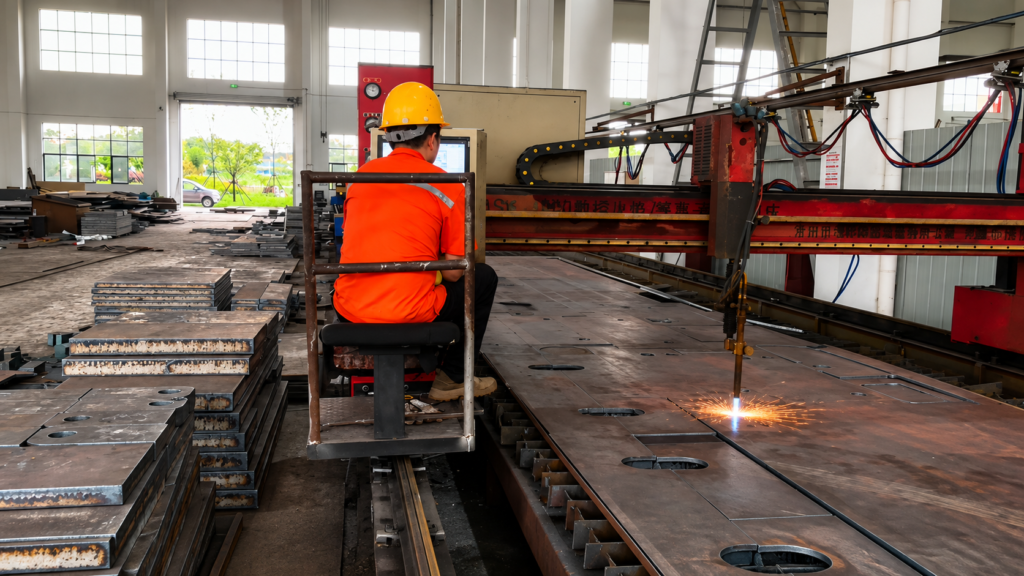
2. Evaluate Plate Cutting Capability and Accuracy
Plate cutting is often the first critical manufacturing step for heavy steel components. The supplier should select an appropriate cutting process based on material type, plate thickness, part geometry, and downstream machining requirements. For heavy plate work, flame cutting and plasma cutting are commonly used, but cutting quality should be evaluated by more than maximum thickness alone.
Buyers should pay attention to dimensional consistency, edge quality, deformation control, cutting allowance, and whether the cut parts are properly prepared for subsequent machining or welding. For components that require tighter tolerances, the supplier should also understand where machining allowance needs to be retained rather than treating the drawing as a simple cutting job.
3. Assess CNC Machining Capability
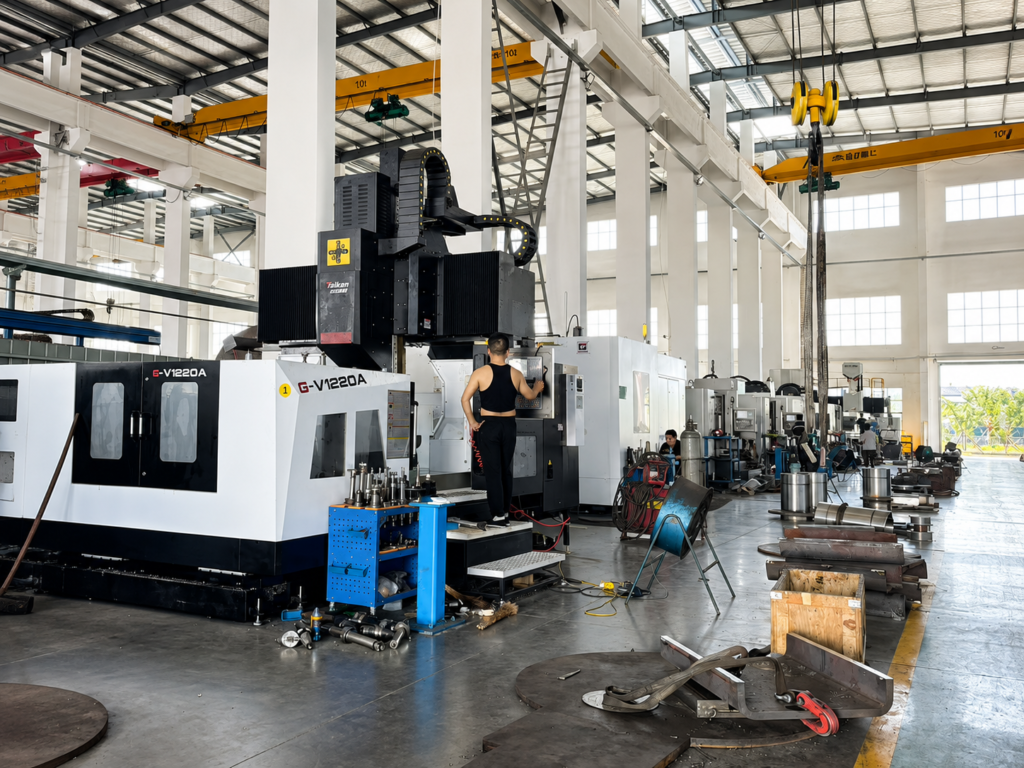
For many heavy equipment components, plate cutting is only the beginning. Parts may require milling, boring, drilling, tapping or CNC turning before they are ready for welding or final assembly. A supplier with in-house machining capability can reduce subcontracting, shorten communication chains and improve control over dimensional accuracy.
When evaluating a supplier, check whether its machining equipment can handle the size, weight and tolerance requirements of your components. More importantly, the supplier should understand how cutting, machining and welding affect each other throughout the manufacturing process.
4. Evaluate Welding and Fabrication Quality
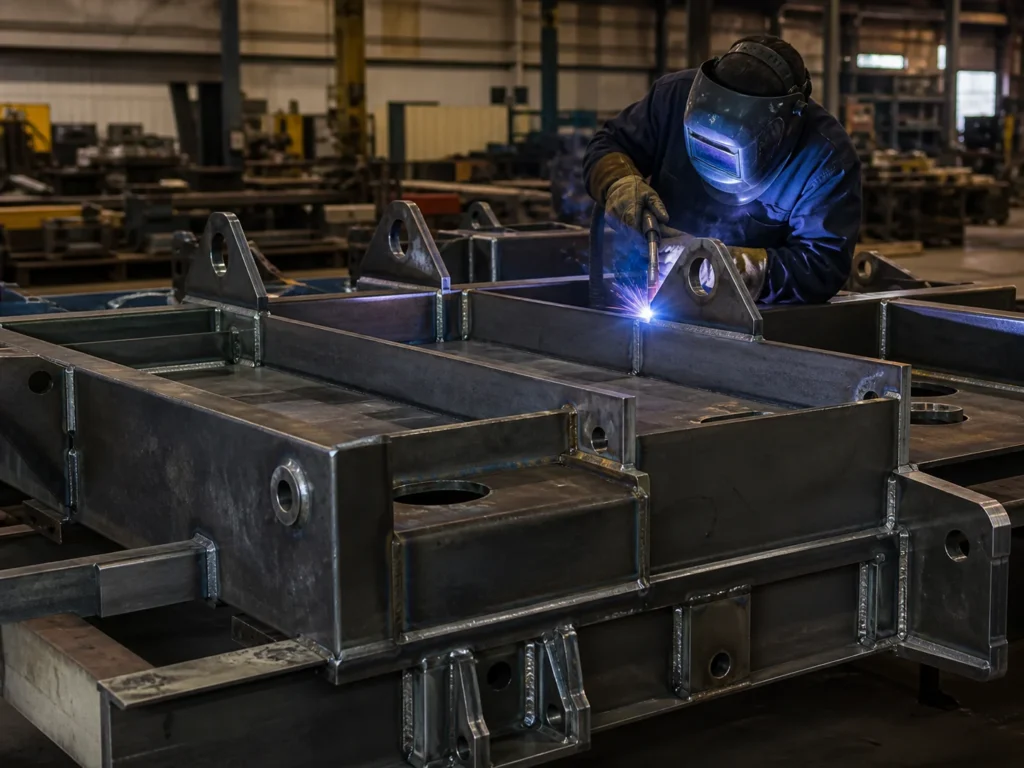
Welding quality is critical for machine frames, equipment bases and other load-bearing steel assemblies. A capable fabrication supplier should control joint preparation, fit-up, welding sequence and distortion throughout production rather than relying only on final inspection.
For custom welded components, buyers should also review the supplier’s experience with similar structures, welding processes and post-weld machining requirements. When cutting, machining and welding are coordinated within the same production system, dimensional problems can often be identified and corrected earlier.
5. Check Quality Control and Inspection Procedures
Quality control should be built into the manufacturing process rather than treated as a final step. For custom steel components, dimensional errors or welding problems discovered too late can lead to expensive rework and delivery delays.
Ask how the supplier checks incoming materials, cut parts, machined dimensions, welded assemblies and finished components. For drawing-based manufacturing, inspection records, material traceability and clear communication of critical tolerances can be especially important.
What Quality Checks Should You Ask About?
- Material certificates and traceability
- Cutting dimensions and machining allowances
- Machined dimensions and tolerances
- Weld appearance and dimensional inspection
- Final inspection before packing and shipment6
6. Evaluate Production Capacity and Delivery Reliability
A supplier may have the right equipment, but that does not automatically mean it can meet your delivery schedule. Production capacity, workload planning and coordination between cutting, machining and welding all affect lead times, especially for large or complex steel components.
Before placing an order, discuss expected quantities, production schedule and delivery requirements. For repeat orders, it is also worth confirming whether the supplier can maintain consistent quality and capacity as volumes increase.
Questions to Ask About Production and Delivery
- What is the typical lead time for similar components?
- Can the supplier support prototypes, small batches and repeat orders?
- Are cutting, machining and welding handled in-house?
- How are production delays communicated?
- How are finished components packed for international shipment?
7. Compare Total Manufacturing Cost, Not Just Unit Price
The lowest quotation is not always the lowest-cost option. A lower unit price can become expensive if the project involves additional subcontracting, repeated transportation, dimensional corrections, rework or communication between multiple suppliers.
When comparing steel fabrication suppliers, consider the complete manufacturing route. A supplier that can manage plate cutting, CNC machining, welding and inspection within one production system may help reduce coordination time and simplify quality control, particularly for complex or heavy steel components.
Look Beyond the Quoted Price
- Material and processing costs
- Additional machining or welding requirements
- Subcontracting and transportation between factories
- Inspection and rework risk
- Packaging and international shipping preparation
- Lead time and communication efficiency
8. Review Experience With Similar Steel Components
Experience with similar components can be more valuable than a long list of general capabilities. Heavy equipment parts often involve thick plates, large dimensions, welded structures, machining allowances and specific tolerance requirements that require coordination across several manufacturing processes.
When evaluating a supplier, ask for examples of comparable components, manufacturing processes or industries they have supported. Real workshop photos, equipment information and production examples can also help you understand whether the supplier has practical experience with projects similar to yours.
Useful Evidence to Review
- Similar machined or welded components
- Real workshop and production photos
- Relevant cutting and machining equipment
- Examples of large or heavy parts
- Inspection capabilities
- Previous project experience in industrial equipment manufacturing
Final Thoughts: Choosing the Right Steel Fabrication Partner
Choosing the right steel fabrication supplier requires looking beyond equipment lists and quoted prices. Material capability, plate cutting, CNC machining, welding, quality control, production capacity and communication should all be evaluated together.
For heavy equipment manufacturers, a supplier that understands the complete manufacturing route can make complex sourcing easier. The goal is not simply to find a factory that can cut or weld steel, but a manufacturing partner that can understand your drawings, coordinate the required processes and consistently deliver components that meet your specifications.
Looking for a Steel Fabrication Supplier in China?
VHOFAB supports custom steel components for industrial equipment manufacturers, from steel plate cutting and CNC machining to welded fabrication and assembly. Customers can source cut parts, machined components, welded assemblies or choose the processing level required for their project.
Send us your drawings, material requirements, quantities and required delivery date. Our team can review your project and provide a manufacturing proposal and quotation.